
Guests rarely talk about acoustics, but they always feel them. A dining room where conversation is effortless feels premium; one where every voice bounces off hard surfaces feels tiring, however good it looks.
The problem with hard, beautiful surfaces
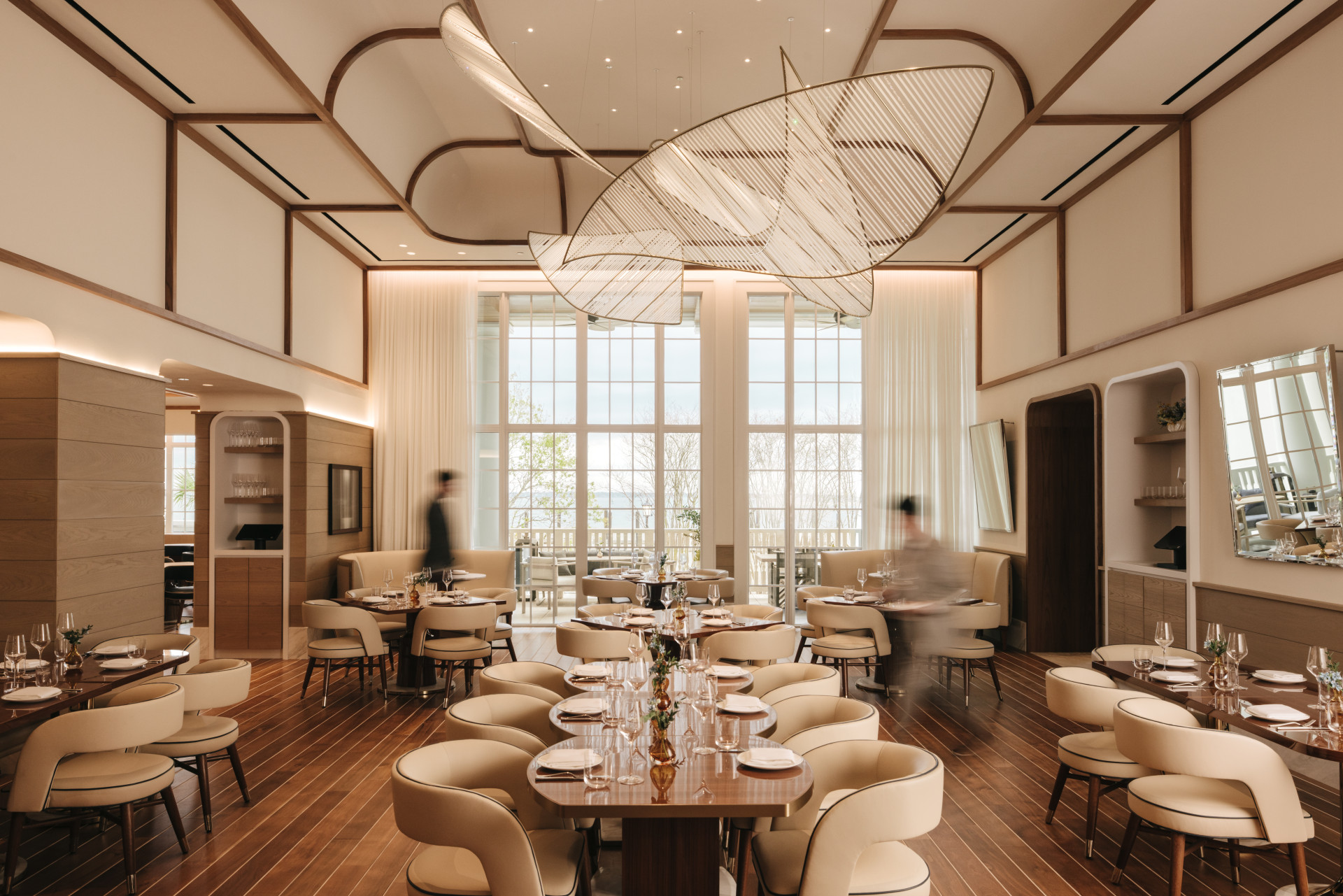
Contemporary interiors love stone, glass, concrete and timber. They look clean and timeless, but they reflect sound. In a busy restaurant or a hotel lobby, those reflections build up into noise that makes people speak louder, which makes the room louder still.
Absorb, don't just block
Good acoustic design is mostly about absorbing reflected sound inside the room. The aim is a space that feels lively but calm, where people can talk without raising their voices.
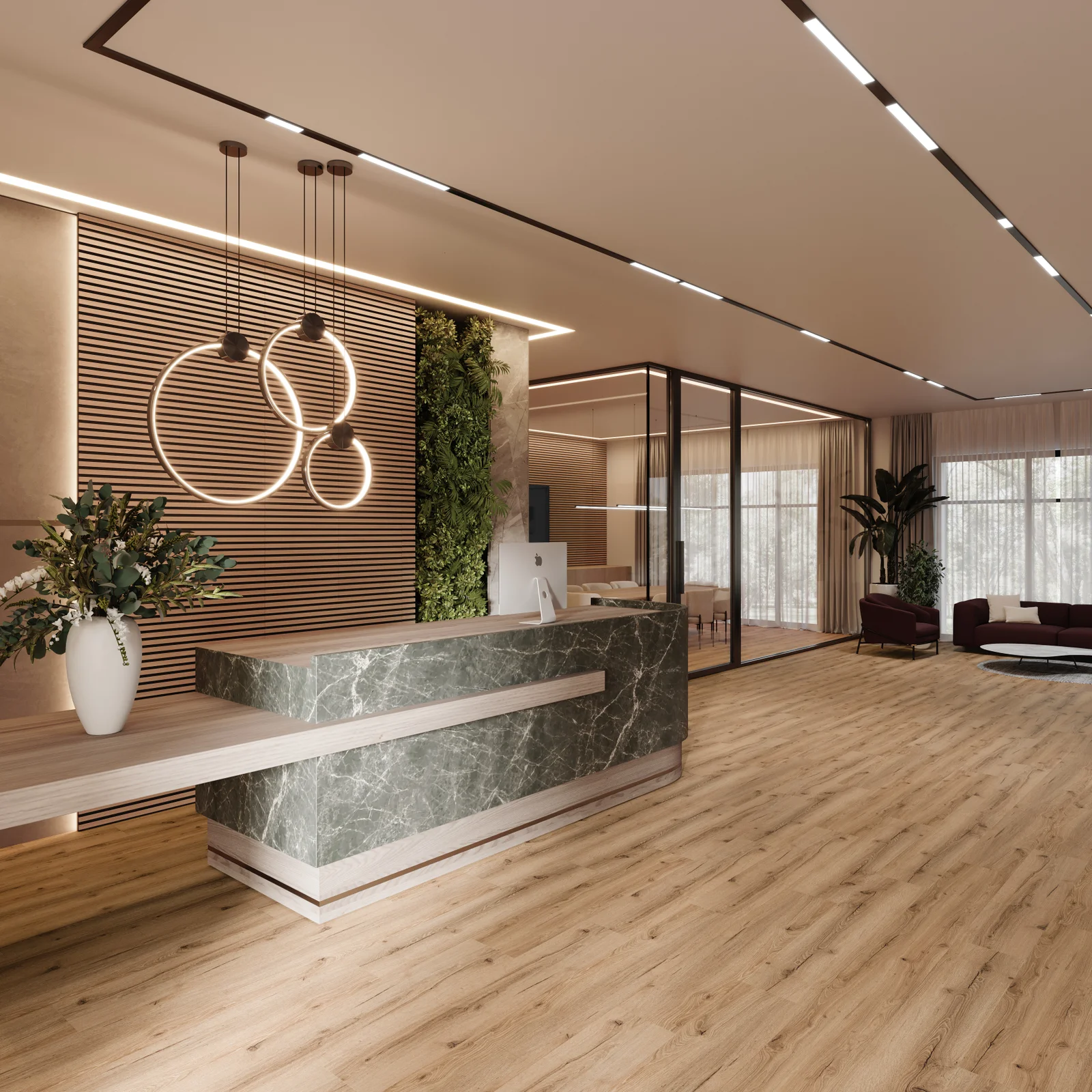
- Acoustic panels on walls and ceilings absorb sound where it reflects most, and can become a design feature in their own right.
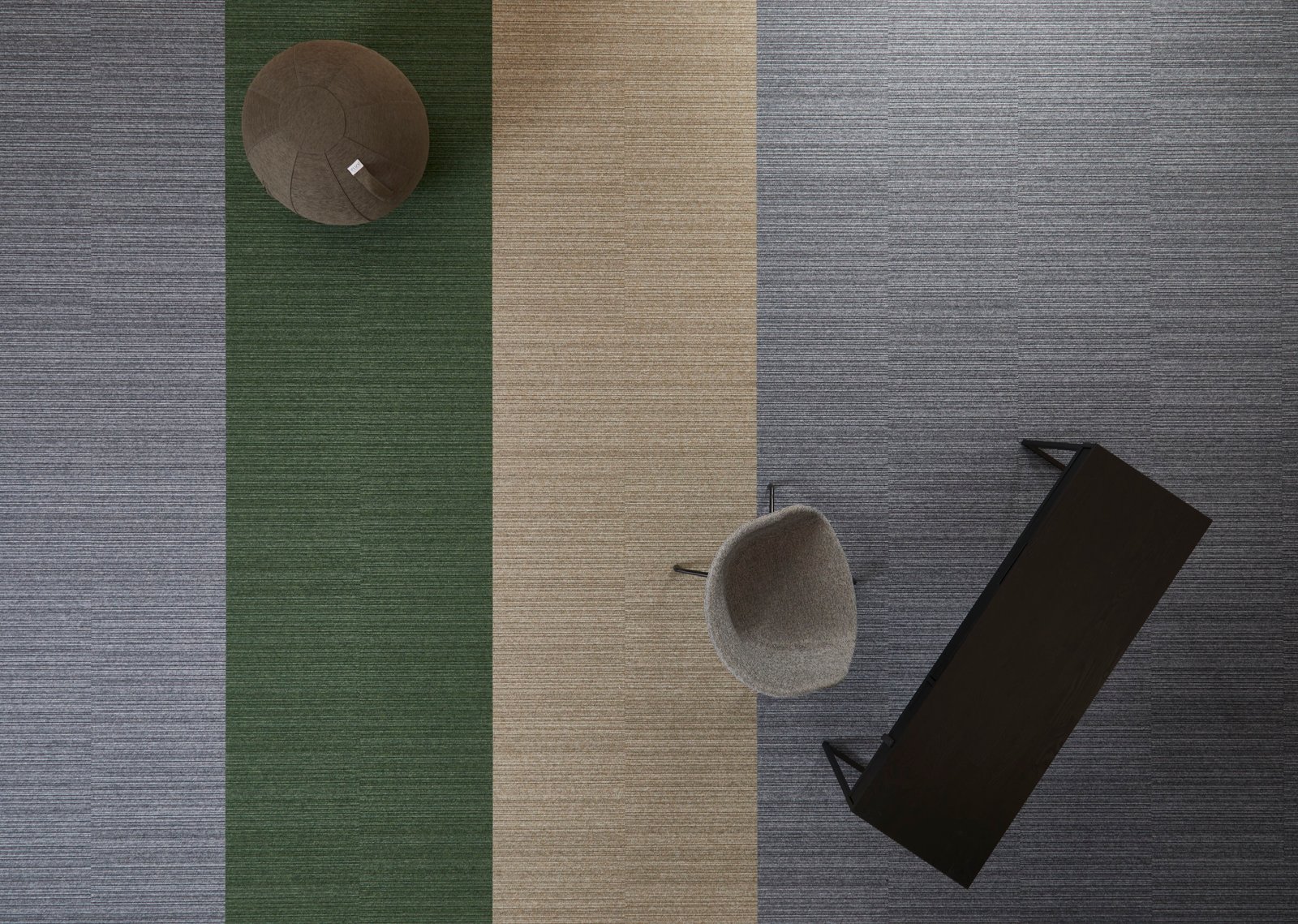
- Carpets and rugs soften footsteps and reduce noise between floors and rooms.
- Curtains and upholstered furniture add absorption in places panels cannot reach.
The best acoustic solutions are the ones guests never notice, only the calm they create.
Design acoustics in, early
Acoustic treatment is easiest and most elegant when it is planned with the interior, not added after the complaints arrive. Choosing panel colours, textures and placement together with the rest of the scheme keeps the result coherent.
Where it matters most
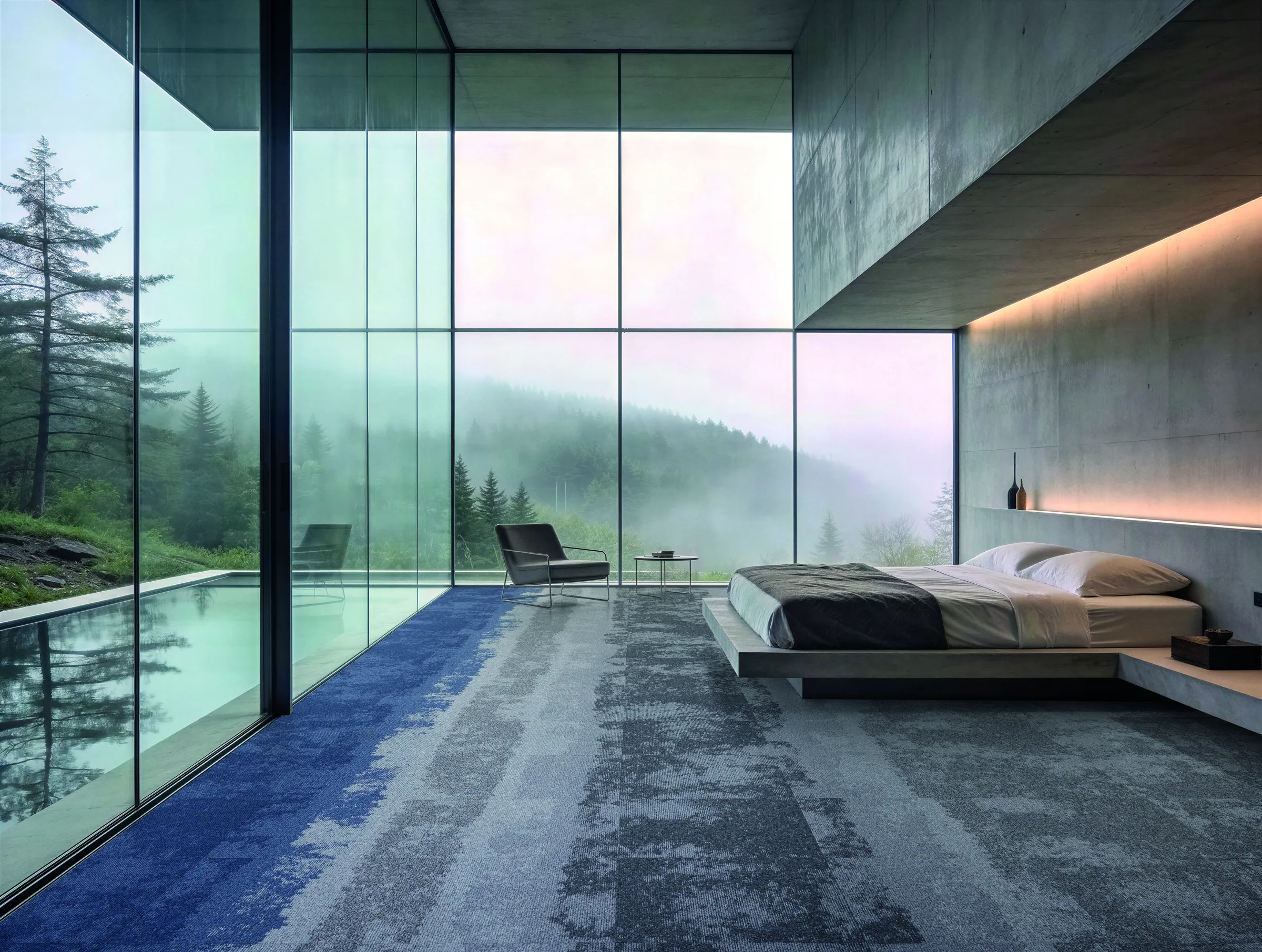
Restaurants, bars, meeting rooms, lobbies and open-plan workspaces benefit the most. In guest rooms, soft flooring and textiles do much of the work and help guests sleep better.